

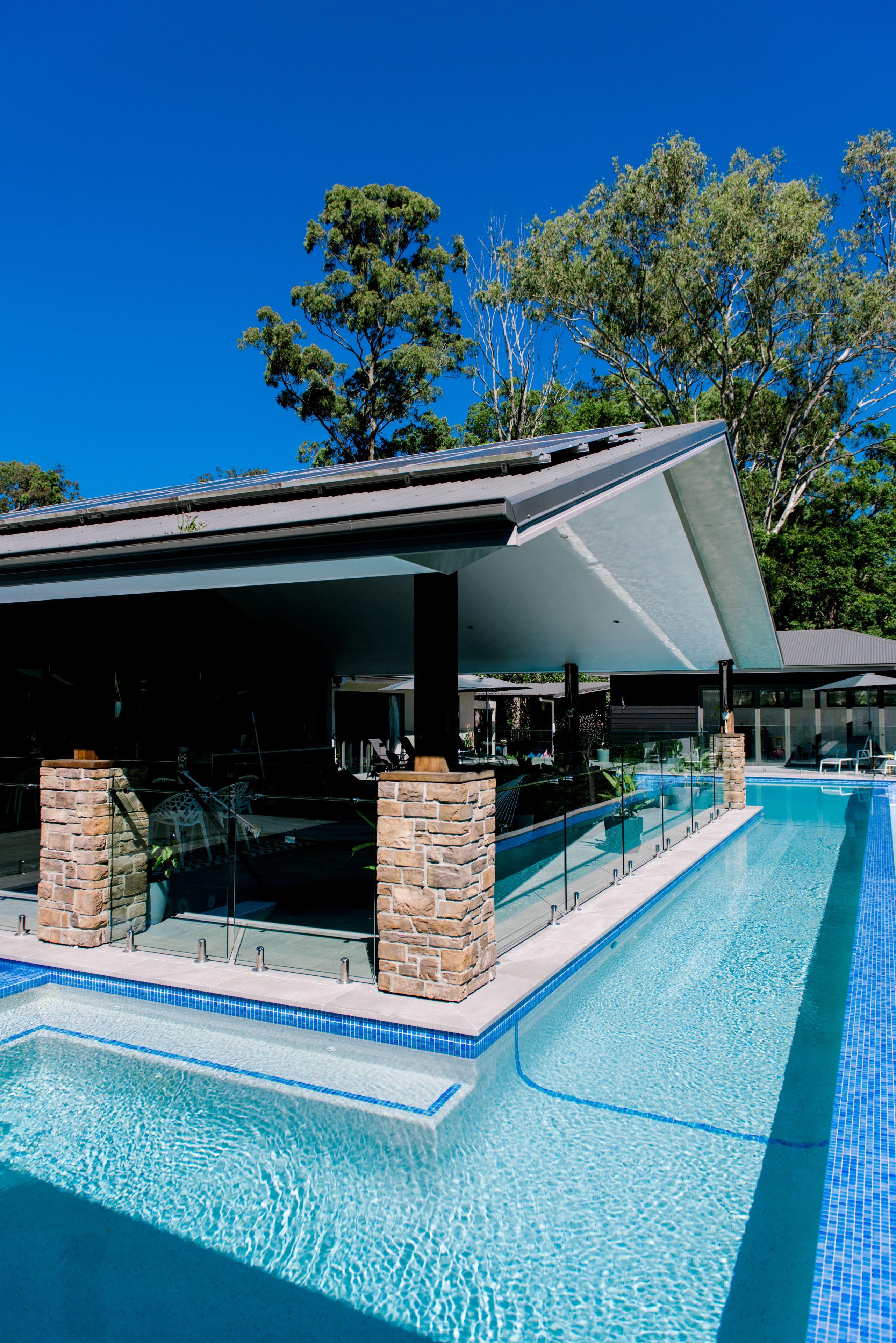
Lap pools suit owners who value fitness, precision, and clean design. Unlike a leisure pool, a lap pool focuses on length and straight lines. Indeed, luxury residential pool construction for this style demands accurate engineering, smooth finishes, and thoughtful placement. This article explains how these pools work and what owners should expect before building.
Key Takeaways
- Lap pools typically measure 10 to 25 meters long and 2 to 4 meters wide.
- Narrow, long blocks and side yards often suit this pool style.
- Straight walls and level floors need exact excavation and shell construction.
- Swim jets, heating, and covers support year-round training.
- Smooth finishes protect swimmers from abrasion during repeated turns.
- Depth, lane width, and wall design affect comfort and performance.
- A detailed quote and early permit planning keep the project on schedule.
What Makes a Lap Pool Different
A lap pool serves one main purpose: continuous swimming. Therefore, designers prioritize length over surface area. Most models run long and narrow, which allows a swimmer to maintain a steady rhythm.
Leisure features take a back seat. For example, owners rarely add wide steps or large tanning ledges. Instead, they choose clean edges, a consistent depth, and a simple layout that keeps attention on the water.
Choosing the Right Length and Width
Size shapes both cost and usability. A 12-meter pool offers a solid workout, whereas a 20-meter pool feels closer to a training facility. Moreover, width determines whether a swimmer can turn comfortably or share the lane.
Many owners choose a width between 2.5 and 3.5 meters. In addition, they plan enough clear space at each end for safe push-offs. Accurate measurements at the design stage prevent expensive changes later.
Depth and Wall Design
Depth affects safety and swimming comfort. Most lap pools hold a consistent depth of 1.2 to 1.5 meters. Consequently, swimmers can turn and push off without feeling cramped.
Wall construction needs extra care. Builders keep surfaces vertical and smooth so flip turns feel natural. Furthermore, they avoid sharp tile edges or rough joins that could scrape skin. A precise shell also helps keep water flowing evenly.
Site Planning for Long, Narrow Pools
Lap pools fit well on tight or elongated blocks. Side yards, courtyards, and narrow rear gardens all work when the layout is right. However, the site must allow machinery to reach the excavation area.
Builders also study sun angles and wind. Specifically, they place the pool to catch morning light and reduce debris from nearby trees. Sloping land may need retaining walls, which add engineering work but can also improve privacy.
Swim Jets and Training Features
Many owners add swim jets to create a current for stationary training. Not only do these systems save space, but they also let swimmers adjust the intensity. As a result, a shorter pool can still deliver a full workout.
Other additions include underwater lighting, lane lines, and deck-level wall markers. For instance, tile stripes on the pool floor guide swimmers in a straight line. Each feature should match the owner’s fitness routine rather than simply add cost.
Heating, Covers, and Year-Round Use
Serious swimmers often train in every season. Accordingly, heating becomes a practical priority. Heat pumps, solar panels, and insulated covers help keep the water at a steady temperature.
Covers also reduce evaporation and debris. In particular, automated models make daily use easier, since a single button opens or closes the surface. Efficient equipment keeps running costs manageable over the long term.
Materials and Finishes for Smooth Swimming
Surface quality matters for comfort. Fine glass mosaic, polished quartz, and high-grade porcelain create a clean, durable lining. Moreover, these materials resist staining and stand up to frequent chemical balancing.
Coping should offer grip without feeling rough. Builders often select a gentle texture that keeps bare feet secure when wet. Therefore, material samples deserve close inspection before final approval.
Permits, Costs, and Builder Selection
Councils usually require a building permit, a compliant safety barrier, and drainage details. Furthermore, engineering reports may apply on sloping or reactive soils. Owners should confirm local rules early to avoid delays.
Costs depend on length, depth, equipment, and site difficulty. An itemized quote makes comparison easier. When researching luxury lap pool construction, owners should ask to see completed projects, check licences, and speak with past clients. A builder who explains trade-offs clearly will guide the project with fewer surprises.